1946
College Establishment
Established as the College of Engineering, Vizagpatnam, by the Government of the Composite Madras State.
Originally opened in temporary sheds at Kakinada.
Founding Year

University College of Engineering Kakinada (Autonomous), JNTU Kakinada, was originally established as the College of Engineering, Vizagpatnam, in 1946 by the Government of the Composite Madras State.
During World War II, after the bombing of Visakhapatnam by Japanese planes on April 6, 1942, Andhra University was shifted temporarily to Guntur so that academic activities could continue without interruption. During this period, permission was obtained from the Madras Presidency to establish an engineering college. The college was initially opened in temporary sheds at Kakinada.
First Principal (July 1946 – March 1947), he was subsequently transferred to Arthur Hope College of Technology, Coimbatore, where he served as Principal from April 1947 to September 1950. Under his guidance, a research scheme on the development of heavy-duty internal combustion engine parts through precision casting, lost-wax and centrifugal processes was sanctioned by the Indian Council of Scientific and Industrial Research on March 18, 1950.
Second Principal (April 1947 – 1952). Earlier, he had served as the Second Principal of Arthur Hope College of Technology, Coimbatore, from December 1946 to April 1947.
The college now occupies a sprawling 110-acre, tree-lined campus in the rapidly developing port city of Kakinada. It became a constituent college of Jawaharlal Nehru Technological University, Hyderabad, with effect from October 2, 1972. The college attained autonomous status in 2001. On August 20, 2008, it became a constituent college of the newly established Jawaharlal Nehru Technological University Kakinada.
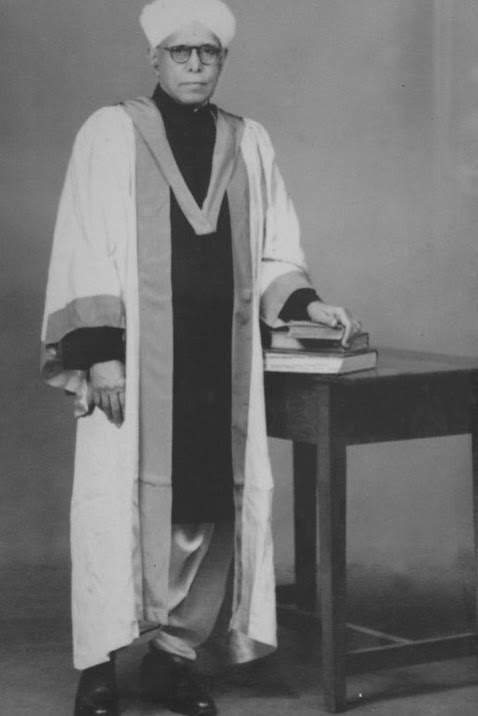
Shri Lakkaraju Subba Rao was one of Andhra's prominent public leaders. A well-known lawyer, educationist and scholar, he served the cause of education with unwavering dedication for over half a century and contributed significantly to public life.
Elected to the Senate of Andhra University in 1926, the year of its inception, he served the University in several capacities and also acted as in-charge Vice-Chancellor. He was the first elected member of the University Syndicate in 1930 and continued in that capacity for nearly twenty-five years. Dr. C. R. Reddy, the University's Founder Vice-Chancellor, described his services as most conscientious and valuable. He also served as the University's Legal Advisor for many years.
He convened the All India Marine and Aeronautical Engineering Committee and served on several other committees related to engineering education, post-war development and library reorganisation. His efforts helped retain the Engineering College at Kakinada instead of shifting it to Visakhapatnam, as originally planned.
Established as the College of Engineering, Vizagpatnam, by the Government of the Composite Madras State.
Originally opened in temporary sheds at Kakinada.
Founding YearProf. A. Viswanath served as the first Principal from July 1946 to March 1947.
Prof. VH Sadarangani served as the second Principal from April 1947 to 1952.
Leadership EraBecame a constituent college of Jawaharlal Nehru Technological University, Hyderabad, with effect from October 2, 1972.
University IntegrationThe college attained autonomous status, providing greater academic flexibility.
Academic FreedomBecame a constituent college of the newly established Jawaharlal Nehru Technological University Kakinada on August 20, 2008.
ModernisationA sprawling 110-acre campus in the port city of Kakinada.
Continuing its legacy of excellence in engineering education.
Ongoing Excellence